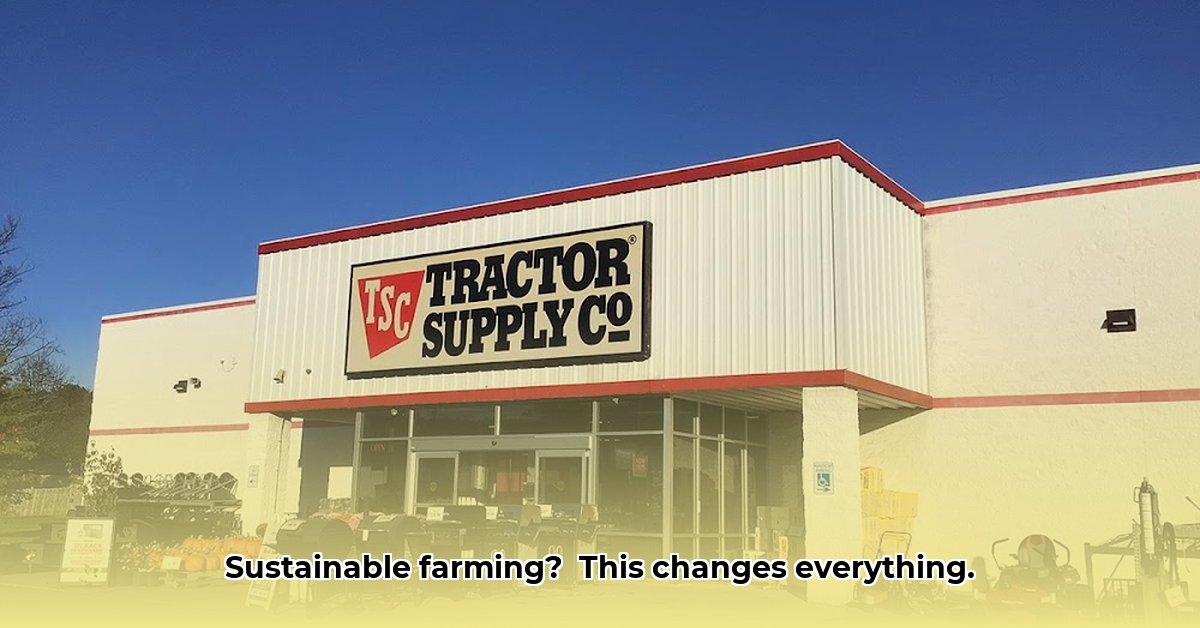
A Local Store's Big Impact on Sustainable Agriculture
Tractor Supply Company (TSC) in Clearfield, Pennsylvania, plays a significant, albeit often unquantified, role in supporting sustainable agricultural practices within the local community. While not explicitly marketing itself as a champion of sustainability, the store's accessibility and product range indirectly contribute to environmentally conscious farming methods among a diverse customer base, ranging from small-scale gardeners to larger agricultural operations. However, a complete assessment of TSC's impact requires further investigation into data not readily available to the public. For more information on TSC's animal feed offerings, check out this page.
Unpacking the Impact: Data's Challenges and Observable Contributions
TSC offers a wide selection of products, encompassing animal feed, farming equipment, seeds, and gardening supplies. The absence of publicly available sales data or market share figures, however, limits a precise quantification of the store's contribution to sustainable practices. Nevertheless, its strategic location within the Clearfield Mall suggests a deliberate effort to reach a broader customer base, maximizing accessibility for local farmers. Furthermore, anecdotal evidence points to the importance of the store's reputation for knowledgeable and friendly staff in building strong customer relationships within the community. This fosters trust and encourages farmers to rely on TSC for their supplies.
Have you considered the indirect benefits of easily accessible and high-quality supplies? How might this improve efficiency and farm output in the long run?
The Ripple Effect: Indirect Support for Sustainable Farming
TSC’s influence on sustainable farming is multifaceted. The availability of high-quality animal feed, for instance, can lead to healthier livestock and potentially more efficient farming techniques, reducing the environmental impact of animal agriculture. Similarly, convenient access to gardening supplies promotes local food production, thereby reducing reliance on extensive, often less environmentally friendly, large-scale food distribution networks. These contributions are crucial elements of a sustainable food system. However, crucial details remain to be ascertained: What percentage of TSC's feed is locally sourced? What is the sustainability of their packaging materials? Addressing these questions would provide a far more comprehensive evaluation of the store's overall environmental footprint.
Working Towards a Greener Future: Actionable Steps for Growth
Further enhancing TSC's positive impact on local sustainable agriculture requires collaborative efforts from various stakeholders.
For Clearfield Tractor Supply:
- Short-Term (0-1 year): Conduct a thorough inventory assessment, focusing on the sustainability of offered products. Directly engage customers to understand their sustainability-related needs and priorities. Implement staff training on environmentally friendly farming practices.
- Long-Term (3-5 years): Introduce a loyalty program to reward local farmers for their patronage. Establish collaborations with local agricultural organizations on joint sustainability initiatives. Implement a system for tracking and reporting the sales of eco-friendly products to accurately measure progress.
For Local Farmers:
- Short-Term: Maximize TSC's resources to improve crop yields and animal welfare. Explore bulk purchasing options to reduce expenses.
- Long-Term: Actively communicate the demand for more sustainable products to TSC. Consider forming a cooperative to leverage greater purchasing power and negotiate favorable terms with suppliers, including TSC.
For the Local Government:
- Short-Term: Conduct an assessment of TSC's contribution to local food security and economic development. Support local initiatives promoting agriculture and sustainable initiatives.
- Long-Term: Invest in infrastructure improvements for increased agricultural efficiency. Implement policies that incentivize sustainable agriculture and foster partnerships between TSC and local farmers.
Navigating Challenges and Regulations: Risks and Rewards
Managing potential risks is imperative for TSC's continued success, and for the broader agricultural sustainability goals for the region.
| Risk Factor | Likelihood | Impact | Mitigation Strategy |
|---|---|---|---|
| Supply chain disruptions | Moderate | High | Diversify suppliers; Strengthen supplier relationships; Invest in reliable logistics. |
| Shifting consumer preferences | Moderate | Moderate | Regularly adapt product offerings; Conduct thorough market research; Monitor market trends. |
| Online retailer competition | High | Moderate | Enhance in-store experience; Offer convenient online ordering with local store pickup; Build stronger community relationships. |
| Limited awareness of eco-friendly options | High | Low | Improve in-store signage and advertising; Promote sustainable products through local channels. |
Regulatory compliance is paramount. TSC, like all businesses operating in this sector, must adhere to regulations concerning agricultural chemicals, animal feed, and general product sales, encompassing labeling standards, environmental protection laws, and animal welfare regulations.
A Shared Future: TSC and the Clearfield Agricultural Community
The prosperity of Clearfield Tractor Supply and the overall health of the local agricultural community are closely intertwined. Through collaborative efforts and a shared commitment to sustainability, the positive impacts of TSC can be amplified, leading to a more sustainable and prosperous future for Clearfield. This requires ongoing collaboration, adaptation, and a shared vision for a healthier environment. The ongoing exploration and implementation of sustainable practices represent a journey of continuous improvement and innovation.